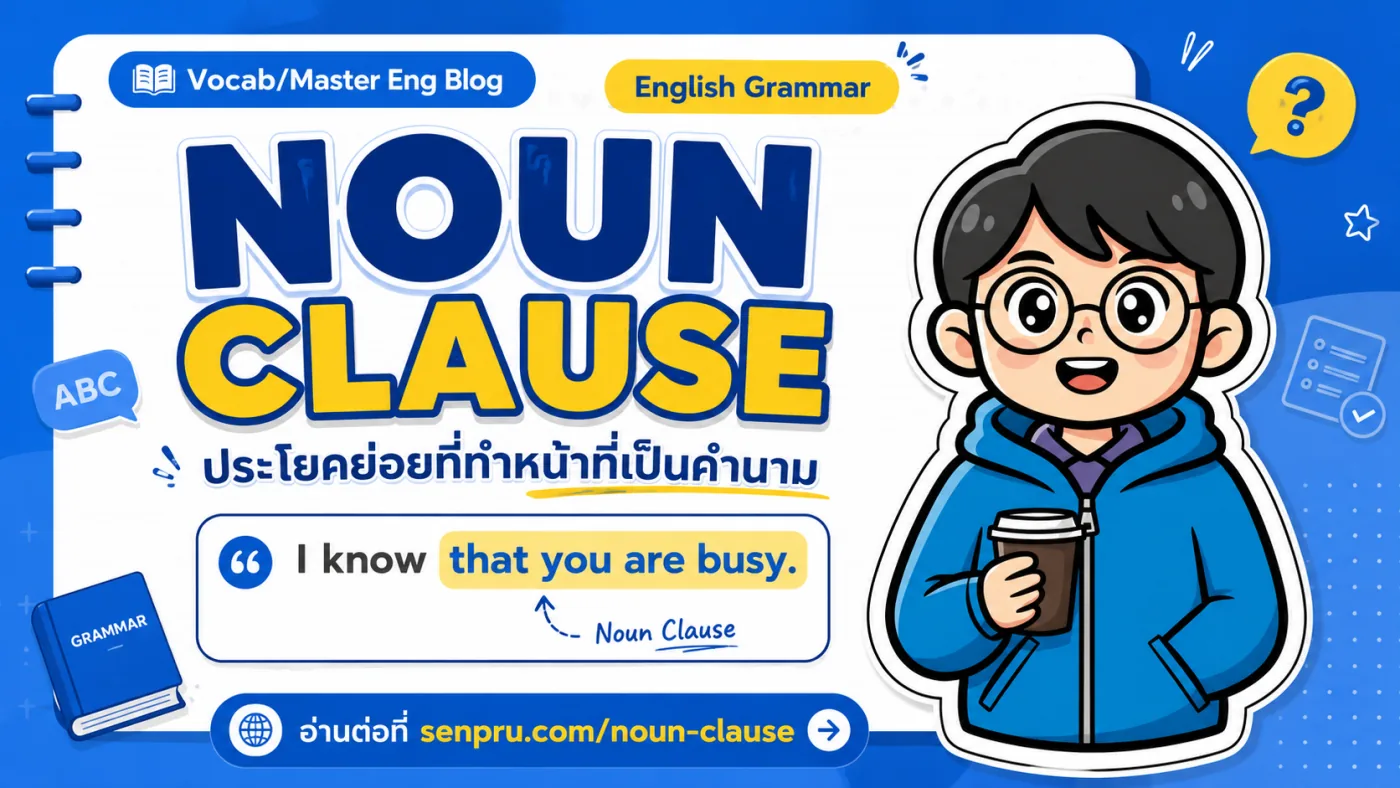
- Noun Clause: ประโยคย่อยที่ทำหน้าที่เป็นคำนาม
#Noun Clause: ประโยคย่อยที่ทำหน้าที่เป็นคำนาม
Noun Clause หรือ ประโยคย่อยคำนาม คือประโยคย่อยที่มีทั้งประธานและกริยา แต่ทำหน้าที่เหมือน คำนาม ภายในประโยคหลัก
ตัวอย่าง:
What she said was true.
สิ่งที่เธอพูดเป็นความจริง
กลุ่มคำ What she said มีประธานคือ she และกริยาคือ said จึงเป็นประโยคย่อย และทั้งกลุ่มทำหน้าที่เป็นประธานของประโยคหลัก
#1. โครงสร้างพื้นฐานของ Noun Clause
โครงสร้างโดยทั่วไปคือ
คำเชื่อม + Subject + Verb + ...
ตัวอย่าง:
that + she + will succeed
what + you + want
whether + he + will come
เมื่อนำไปใช้ในประโยค:
I believe that she will succeed.
ฉันเชื่อว่าเธอจะประสบความสำเร็จ
Tell me what you want.
บอกฉันว่าคุณต้องการอะไร
I do not know whether he will come.
ฉันไม่รู้ว่าเขาจะมาหรือไม่
#2. หน้าที่ของ Noun Clause
Noun Clause สามารถทำหน้าที่ได้หลายตำแหน่ง เช่นเดียวกับคำนาม
#2.1 ทำหน้าที่เป็นประธานของประโยค
What he said is true.
สิ่งที่เขาพูดเป็นความจริง
Why she left remains a mystery.
เหตุผลที่เธอจากไปยังคงเป็นปริศนา
ตำแหน่ง Noun Clause อยู่หน้ากริยาหลักของประโยค
#2.2 ทำหน้าที่เป็นกรรมของกริยา
I know that you are busy.
ฉันรู้ว่าคุณกำลังยุ่ง
She explained why she was late.
เธออธิบายว่าทำไมเธอจึงมาสาย
Noun Clause อยู่หลังกริยา เช่น know, think, believe, explain, wonder และ remember
#2.3 ทำหน้าที่เป็นส่วนเติมเต็มของประธาน
มักอยู่หลัง Linking Verb เช่น be, seem หรือ become
The problem is how we can fix it.
ปัญหาคือเราจะแก้ไขมันได้อย่างไร
The truth is that he forgot the meeting.
ความจริงคือเขาลืมการประชุม
#2.4 ทำหน้าที่เป็นกรรมของบุพบท
I am interested in what you do.
ฉันสนใจในสิ่งที่คุณทำ
We talked about how the system works.
เราพูดคุยเกี่ยวกับวิธีที่ระบบทำงาน
#2.5 ทำหน้าที่ขยายคำนาม
This is the reason why he left early.
นี่คือเหตุผลที่เขากลับก่อน
I like the idea that we can learn from mistakes.
ฉันชอบแนวคิดที่ว่าเราสามารถเรียนรู้จากความผิดพลาดได้
#3. คำเชื่อมที่ใช้กับ Noun Clause
#3.1 that
ใช้เมื่อต้องการนำเสนอข้อความหรือข้อเท็จจริง มีความหมายว่า “ว่า”
I think that English is important.
ฉันคิดว่าภาษาอังกฤษมีความสำคัญ
She said that she was tired.
เธอบอกว่าเธอเหนื่อย
ในภาษาพูดหรือการเขียนแบบไม่เป็นทางการ สามารถละ that ได้เมื่อ Noun Clause เป็นกรรม
I know (that) you are right.
แต่ไม่ควรละ that เมื่ออาจทำให้ประโยคกำกวมหรืออ่านยาก
#3.2 กลุ่ม Wh-words
ได้แก่
what— อะไร / สิ่งที่who— ใครwhom— ใครในตำแหน่งกรรมwhose— ของใครwhich— อันไหนwhen— เมื่อไรwhere— ที่ไหนwhy— ทำไมhow— อย่างไร
ตัวอย่าง:
I understand what you mean.
ฉันเข้าใจสิ่งที่คุณหมายถึง
Do you know where he lives?
คุณรู้ไหมว่าเขาอาศัยอยู่ที่ไหน
She asked why the server stopped.
เธอถามว่าทำไมเซิร์ฟเวอร์จึงหยุดทำงาน
#3.3 if และ whether
ใช้ในความหมายว่า “ว่า...หรือไม่”
I do not know if he is coming.
ฉันไม่รู้ว่าเขาจะมาหรือไม่
She asked whether we were ready.
เธอถามว่าเราพร้อมหรือไม่
โดยทั่วไป whether เป็นทางการกว่า if และนิยมใช้ในกรณีต่อไปนี้
#ใช้หน้า or not
I cannot decide whether or not I should go.
#ใช้หลังบุพบท
We talked about whether the plan was practical.
#ใช้เป็นประธานของประโยค
Whether he agrees is not important.
#4. Noun Clause ที่มาจากคำถาม
เมื่อเปลี่ยนคำถามตรงให้เป็น Noun Clause หรือคำถามทางอ้อม ต้องใช้ลำดับคำแบบประโยคบอกเล่า
#คำถามตรง
Where does she live?
#Noun Clause
I know where she lives.
ไม่ใช้:
I know where does she live.
เพราะภายใน Noun Clause ต้องเรียงคำเป็น
Subject + Verb
ไม่ใช่ลำดับคำแบบคำถาม
อีกตัวอย่าง:
What did he say?
เปลี่ยนเป็น:
I wonder what he said.
#5. Yes/No Question Clause
คำถามที่ตอบด้วย Yes หรือ No สามารถเปลี่ยนเป็น Noun Clause โดยใช้ if หรือ whether
#คำถามตรง
Is she ready?
#Noun Clause
I wonder if she is ready.
#คำถามตรง
Will they join us?
#Noun Clause
We do not know whether they will join us.
สังเกตว่าไม่ใช้รูปคำถามภายในประโยคย่อย
ผิด: I wonder if is she ready.
ถูก: I wonder if she is ready.
#6. จุดสังเกตสำคัญ
#6.1 Noun Clause มีประธานและกริยา
What you said was helpful.
ในประโยคย่อย:
- Subject:
you - Verb:
said
#6.2 ไม่ใช้เครื่องหมายคำถามเสมอไป
แม้ Noun Clause จะมีคำว่า what, why, how หรือ whether แต่หากประโยคหลักเป็นประโยคบอกเล่า ให้ใช้จุด
I know where he is.
ถ้าประโยคหลักเป็นคำถาม จึงใช้เครื่องหมายคำถาม
Do you know where he is?
#6.3 ระวังลำดับคำ
ผิด: I do not know where is he.
ถูก: I do not know where he is.
ผิด: She asked what did I want.
ถูก: She asked what I wanted.
#6.4 ความสอดคล้องของกาล
เมื่อกริยาในประโยคหลักเป็นอดีต กริยาใน Noun Clause มักเปลี่ยนเป็นอดีตตามบริบท
She said that she was tired.
อย่างไรก็ตาม หากข้อความนั้นเป็นข้อเท็จจริงทั่วไป สามารถคง Present Simple ได้
The teacher explained that water boils at 100°C.
#7. เปรียบเทียบ Noun Clause กับ Noun Phrase
#Noun Phrase
The new student is friendly.
The new student เป็นกลุ่มคำนาม แต่ไม่มีโครงสร้างประธานและกริยาภายใน
#Noun Clause
Whoever joins the class must register.
Whoever joins the class มีประธานและกริยา จึงเป็น Noun Clause
#8. ตัวอย่างเพิ่มเติม
#เป็นประธาน
What they are doing is a secret.
#เป็นกรรม
I wonder why she did not come.
#เป็นกรรมของกริยา asked
He asked if I could help him.
#เป็นส่วนเติมเต็ม
The question is whether we should go.
#ขยายคำนาม
I like the idea that we can learn from mistakes.
#9. แบบฝึกหัด
จงขีดเส้นใต้ Noun Clause ในแต่ละประโยค
- What she said surprised everyone.
- I believe that he can solve the problem.
- We do not know whether the class will continue.
- Please tell me where you bought this book.
- The truth is that nobody called him.
#เฉลย
- What she said
- that he can solve the problem
- whether the class will continue
- where you bought this book
- that nobody called him
#10. สรุป
Noun Clause คือประโยคย่อยที่ทำหน้าที่เหมือนคำนาม โดยสามารถเป็นประธาน กรรม ส่วนเติมเต็ม กรรมของบุพบท หรือส่วนขยายคำนามได้
โครงสร้างสำคัญคือ
คำเชื่อม + Subject + Verb
คำเชื่อมที่พบบ่อย ได้แก่ that, what, who, where, when, why, how, if และ whether
สิ่งสำคัญที่สุดคือ เมื่อ Noun Clause มาจากคำถาม ต้องเปลี่ยนลำดับคำให้เป็นแบบประโยคบอกเล่า
Question: Where does he live?
Noun Clause: I know where he lives.
เมื่อเข้าใจหน้าที่ โครงสร้าง และคำเชื่อมของ Noun Clause แล้ว ผู้เรียนจะสามารถสร้างประโยคภาษาอังกฤษที่ซับซ้อน ชัดเจน และเป็นธรรมชาติมากขึ้น